seminars
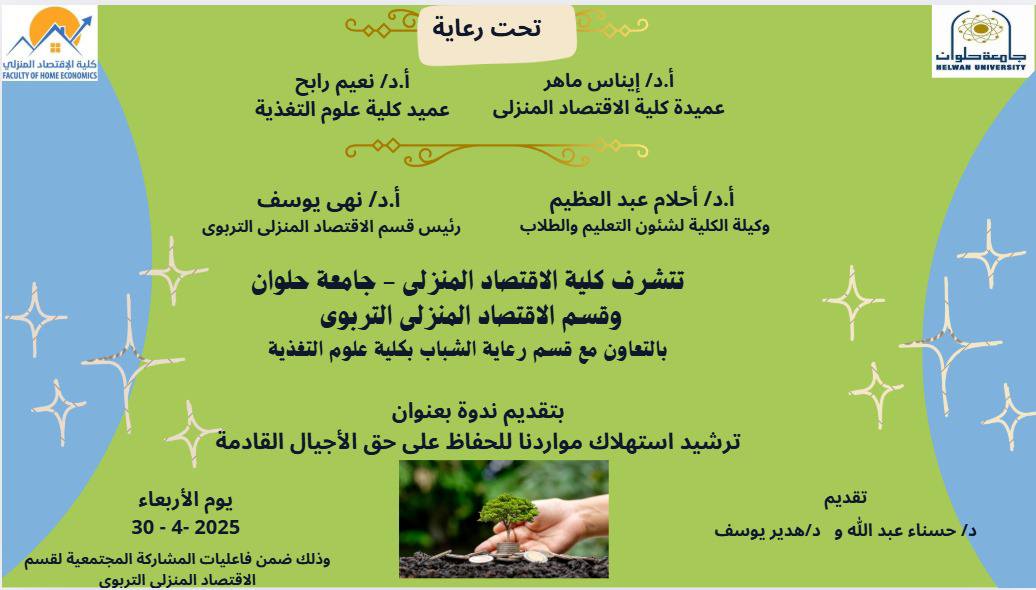
Seminar About: "Rationalizing the Consumption of Our Resources to Preserve Future Generations"
Hits: 228
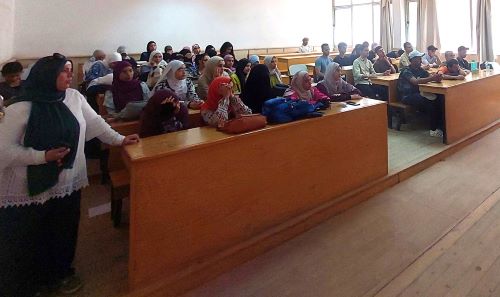
Under the patronage of Prof. Dr. Naeem Mohamed Rabeh, Dean of the Faculty, and the supervision of the Youth Welfare Department (Ms. Rehab Abdel Aal), a seminar entitled “Rationalizing Resource Consumption” was held on Wednesday, April 30, 2025, at the Faculty of Nutrition Science.
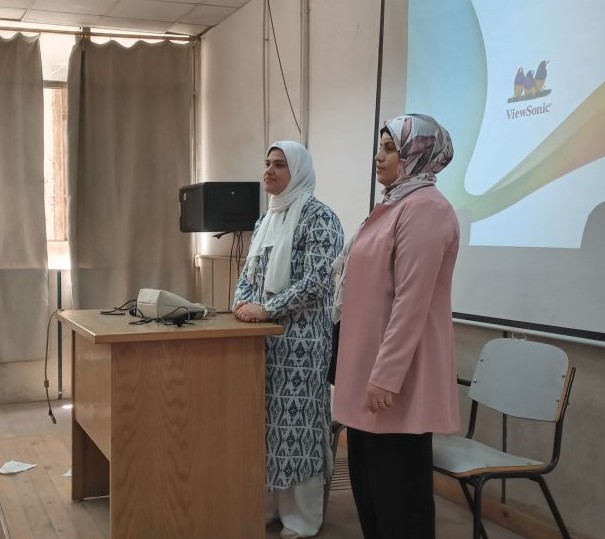
The seminar was presented by Dr. Hasnaa Abdallah and Dr. Hadeer Youssef from the Faculty of Home Economics – Department of Educational Home Economics.
Modern societies face major challenges in managing their natural resources, particularly water, electricity, and food. Rationalizing the consumption of these resources is a collective responsibility that contributes to sustainable development and ensures a better future for coming generations.
Objectives of the Seminar:
1. Raise awareness about the importance of natural resources and the necessity of conserving them.
2. Present practical methods for rational use in daily life.
3. Discuss the environmental and economic impacts of resource waste.
4. Promote a sense of responsibility and community participation in resource conservation.
Seminar Themes:
1. Water Conservation:
- Importance of water as a limited resource.
- Practical water-saving methods in homes and institutions (drip irrigation, fixing leaks, using water-saving devices).
- Environmental impacts of water waste.
2. Electricity Conservation:
- The link between energy conservation and reducing carbon emissions.
- Optimal use of electrical appliances and energy-saving lighting.
- Importance of renewable energy sources.
3. Food Conservation:
- The issue of food waste and its consequences.
- Smart shopping and proper food storage.
- Promoting a culture of recycling food leftovers and reusing them.
At the conclusion of the seminar “Rationalizing Resource Consumption: Water, Electricity, and Food – Our Shared Responsibility”, which aimed to spread awareness on the importance of preserving natural resources and instilling a culture of rational use across different aspects of life, the following recommendations were made:
1. Increase public awareness of conservation through educational and media campaigns and activate the role of social media in delivering purposeful environmental messages.
2. Integrate concepts of sustainability and conservation into school curricula to build a conscious generation capable of assuming responsibility for the environment and its resources.
3. Encourage families, public institutions, and private entities to adopt conservation practices at home and in the workplace, and reward outstanding initiatives in this area.
4. Rely on modern technologies to reduce waste, such as smart irrigation systems, energy-saving lighting, and energy consumption monitoring devices.
5. Support legislation and policies that protect resources from overuse and impose oversight on excessive consumer behaviors.
6. Continue holding seminars and training courses in educational and community institutions to enhance understanding and engagement with conservation issues.
Helwan University strives to be a leading educational and research institution in technology and the arts, and excels in education and sciences according to international quality standards
Important Links
- Visits 51486